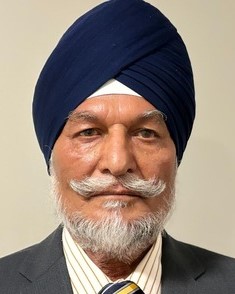
By Darbara Singh Kahlon—
Every year in June, the print and electronic media publish articles and hold discussions about Operation Blue Star — the brutal military operation carried out by the Indian state army inside Punjab under the late Prime Minister Mrs. Indira Gandhi. And in November, after her assassination on October 31, about the Sikh massacres in Delhi and at many other places carried out under state patronage by Prime Minister Rajiv Gandhi’s government. Apart from religious, political, and social events where these issues are raised loudly, everything goes quiet afterward, leaving Punjabis’ wounds — especially those of Sikhs — reopened. The “White Paper” published by the Government of India on Operation Blue Star was in reality a complete “Black Paper.” Ten commissions and committees formed to investigate the November 1984 genocide of the Sikh community, plus reports by Human Rights Watch and Amnesty International, all failed to uncover the truth of these unbearable, barbaric incidents, deliver justice, or ensure punishment for the guilty. *Truth and Reconciliation Commission* Whispers are often heard in the corridors of the Central and Punjab governments about forming a “Truth and Reconciliation Commission” to uncover the truth, ensure punishment for the guilty, and create a path for all Indians to live together peacefully with brotherhood. But the truth has never come out. In 1997, Punjab Chief Minister Parkash Singh Badal of the Akali-BJP government ended the idea of such a commission by saying, “There’s no need to dig up buried corpses now.” It’s also surprising why the brave, resilient, and courageous Punjabis, especially the Sikh community, remained silent. *Example: Canada’s Indigenous People* About 1.8 million Indigenous people live in Canada — the original owners of that land. For 150 years, the British colonial government carried out barbaric atrocities in residential schools and settlements to commit genocide, erase their language and culture, and seize their lands, property, and natural resources. Through courage, persistence, and struggle, they compelled the Canadian government to form a Truth and Reconciliation Commission in 2008. Nearly 6,500 survivors appeared as witnesses. The Commission released its report in 2015 with 94 recommendations for justice and rehabilitation. Surprisingly, 45 million Punjabis and over 30 million Sikhs live in India, yet they have not been able to get a Truth and Reconciliation Commission formed to know the truth and get justice for Operation Blue Star and the November 1984 Sikh genocide, nor have they approached the International Court of Justice. *Approach to International Bodies* To get Canada’s government to implement the Commission’s recommendations and uncover the remaining truth, Indigenous leaders approached an International Human Rights organization. A panel began hearings in Matirial. After one week, the panel found the Canadian state and government guilty of genocide against Indigenous people. A permanent Public Tribunal was set up to locate missing/disappeared children and unmarked graves in residential schools that operated for 150 years, including in settlements. Indigenous people welcomed it, hoping for answers and help to live together peacefully. Survivors are trying to create a system to hear and understand them. During hearings, witnesses described how children were denied food and medicine, leading to malnutrition, and were forced into labor. Children died from cold, filth, disease, and overcrowding. They suffered sexual and physical abuse, beatings, and solitary confinement. Tribunal Judge Francis Weber recounted how victim Audrey Hill cried while describing being kept hungry and thirsty in a filthy solitary cell. He said 4,000 to 6,000 children either died in residential schools or were disappeared. Witness Dr. Scott Hamilton said not all deaths were recorded, and of those that were, half died of TB. Women testified to forced sterilization, racial violence against those in medical professions, forced disappearance, torture, sexual violence, slavery, and inhuman treatment. The main aim of all this torture was to seize Indigenous land, territory, and natural resources. Notably, the Canadian government did not participate. But Pascal Laptat, Spokesperson for Crown-Indigenous Relations and Northern Affairs, said the story of residential schools in Canadian colonial history is extremely shameful and still deeply felt. The current Canadian government treats Indigenous people as respected partners and is working on education, communication development, and healing their wounds. The Tribunal says Canada failed its responsibilities toward Indigenous people, as recorded in the UN Declaration on the Rights of Indigenous Peoples and the 2015 Truth and Reconciliation Commission report. Judge Wilton Littlechild argued Canada must fulfill its legal, moral, and political duty through a planned integration policy. *Reality* The brutal treatment of Indigenous people in Canada and the destruction of their existence, culture, and language continue to be condemned, even after apologies from the government and the Vatican Pope. Government lawyer Krista Big Canoe said they are moving forward with hope. The Tribunal has sent its findings and recommendations to the government. The final decision will be presented on September 30, 2026, on the National Day for Truth and Reconciliation. The International Peoples’ Tribunal, formed in 1979 to investigate crimes against humanity, is hearing this as its 57th case on missing children and unmarked graves related to Canada. *Justice for Punjabis* Until a Tribunal formed by the International Peoples’ Tribunal investigates the cruel injustices against Punjabis, especially the Sikh minority, after partition, there can be no hope of truth or justice. Punjabis and Sikhs living in India and abroad must build pressure on the Government of India and Punjab for a Tribunal and a Truth and Reconciliation Commission like Canada’s. The BJP leadership in Punjab has promised Punjabis and Indians a developed, justice-loving state like Maharaja Ranjit Singh’s. After the Pala dynasty, Maharaja Ranjit Singh — a Sikh — ruled sovereign, powerful, independent Punjab. Sikhs were only 8% of the population then. He gave honorable representation to the other 92% — Hindus, Muslims, and others — in his rule and cabinet, creating an inclusive welfare state and setting an example of equal justice. That’s why poet Shah Muhammad wrote: _“Rajee bahut rehinde musalmaan hindu”_ — “Muslims and Hindus lived very contentedly.” At that time, one Nanakshahi rupee equaled 13 pounds. Will the BJP-led Narendra Modi government in India implement Maharaja Ranjit Singh’s governance model? Will it ensure a permanent Tribunal through the International Peoples’ Tribunal and a Truth and Reconciliation Commission for Punjabis, especially Sikhs, to know the truth and get justice for Operation Blue Star and the November 1984 genocide? Will the Indian state and government seek forgiveness from Parliament for Operation Blue Star and the Sikh genocide from Punjabis, especially Sikhs?
Every year in June, the print and electronic media publish articles and hold discussions about Operation Blue Star — the brutal military operation carried out by the Indian state army inside Punjab under the late Prime Minister Mrs. Indira Gandhi. And in November, after her assassination on October 31, about the Sikh massacres in Delhi and at many other places carried out under state patronage by Prime Minister Rajiv Gandhi’s government. Apart from religious, political, and social events where these issues are raised loudly, everything goes quiet afterward, leaving Punjabis’ wounds — especially those of Sikhs — reopened. The “White Paper” published by the Government of India on Operation Blue Star was in reality a complete “Black Paper.” Ten commissions and committees formed to investigate the November 1984 genocide of the Sikh community, plus reports by Human Rights Watch and Amnesty International, all failed to uncover the truth of these unbearable, barbaric incidents, deliver justice, or ensure punishment for the guilty. *Truth and Reconciliation Commission* Whispers are often heard in the corridors of the Central and Punjab governments about forming a “Truth and Reconciliation Commission” to uncover the truth, ensure punishment for the guilty, and create a path for all Indians to live together peacefully with brotherhood. But the truth has never come out. In 1997, Punjab Chief Minister Parkash Singh Badal of the Akali-BJP government ended the idea of such a commission by saying, “There’s no need to dig up buried corpses now.” It’s also surprising why the brave, resilient, and courageous Punjabis, especially the Sikh community, remained silent. *Example: Canada’s Indigenous People* About 1.8 million Indigenous people live in Canada — the original owners of that land. For 150 years, the British colonial government carried out barbaric atrocities in residential schools and settlements to commit genocide, erase their language and culture, and seize their lands, property, and natural resources. Through courage, persistence, and struggle, they compelled the Canadian government to form a Truth and Reconciliation Commission in 2008. Nearly 6,500 survivors appeared as witnesses. The Commission released its report in 2015 with 94 recommendations for justice and rehabilitation. Surprisingly, 45 million Punjabis and over 30 million Sikhs live in India, yet they have not been able to get a Truth and Reconciliation Commission formed to know the truth and get justice for Operation Blue Star and the November 1984 Sikh genocide, nor have they approached the International Court of Justice. *Approach to International Bodies* To get Canada’s government to implement the Commission’s recommendations and uncover the remaining truth, Indigenous leaders approached an International Human Rights organization. A panel began hearings in Matirial. After one week, the panel found the Canadian state and government guilty of genocide against Indigenous people. A permanent Public Tribunal was set up to locate missing/disappeared children and unmarked graves in residential schools that operated for 150 years, including in settlements. Indigenous people welcomed it, hoping for answers and help to live together peacefully. Survivors are trying to create a system to hear and understand them. During hearings, witnesses described how children were denied food and medicine, leading to malnutrition, and were forced into labor. Children died from cold, filth, disease, and overcrowding. They suffered sexual and physical abuse, beatings, and solitary confinement. Tribunal Judge Francis Weber recounted how victim Audrey Hill cried while describing being kept hungry and thirsty in a filthy solitary cell. He said 4,000 to 6,000 children either died in residential schools or were disappeared. Witness Dr. Scott Hamilton said not all deaths were recorded, and of those that were, half died of TB. Women testified to forced sterilization, racial violence against those in medical professions, forced disappearance, torture, sexual violence, slavery, and inhuman treatment. The main aim of all this torture was to seize Indigenous land, territory, and natural resources. Notably, the Canadian government did not participate. But Pascal Laptat, Spokesperson for Crown-Indigenous Relations and Northern Affairs, said the story of residential schools in Canadian colonial history is extremely shameful and still deeply felt. The current Canadian government treats Indigenous people as respected partners and is working on education, communication development, and healing their wounds. The Tribunal says Canada failed its responsibilities toward Indigenous people, as recorded in the UN Declaration on the Rights of Indigenous Peoples and the 2015 Truth and Reconciliation Commission report. Judge Wilton Littlechild argued Canada must fulfill its legal, moral, and political duty through a planned integration policy. *Reality* The brutal treatment of Indigenous people in Canada and the destruction of their existence, culture, and language continue to be condemned, even after apologies from the government and the Vatican Pope. Government lawyer Krista Big Canoe said they are moving forward with hope. The Tribunal has sent its findings and recommendations to the government. The final decision will be presented on September 30, 2026, on the National Day for Truth and Reconciliation. The International Peoples’ Tribunal, formed in 1979 to investigate crimes against humanity, is hearing this as its 57th case on missing children and unmarked graves related to Canada. *Justice for Punjabis* Until a Tribunal formed by the International Peoples’ Tribunal investigates the cruel injustices against Punjabis, especially the Sikh minority, after partition, there can be no hope of truth or justice. Punjabis and Sikhs living in India and abroad must build pressure on the Government of India and Punjab for a Tribunal and a Truth and Reconciliation Commission like Canada’s. The BJP leadership in Punjab has promised Punjabis and Indians a developed, justice-loving state like Maharaja Ranjit Singh’s. After the Pala dynasty, Maharaja Ranjit Singh — a Sikh — ruled sovereign, powerful, independent Punjab. Sikhs were only 8% of the population then. He gave honorable representation to the other 92% — Hindus, Muslims, and others — in his rule and cabinet, creating an inclusive welfare state and setting an example of equal justice. That’s why poet Shah Muhammad wrote: _“Rajee bahut rehinde musalmaan hindu”_ — “Muslims and Hindus lived very contentedly.” At that time, one Nanakshahi rupee equaled 13 pounds. Will the BJP-led Narendra Modi government in India implement Maharaja Ranjit Singh’s governance model? Will it ensure a permanent Tribunal through the International Peoples’ Tribunal and a Truth and Reconciliation Commission for Punjabis, especially Sikhs, to know the truth and get justice for Operation Blue Star and the November 1984 genocide? Will the Indian state and government seek forgiveness from Parliament for Operation Blue Star and the Sikh genocide from Punjabis, especially Sikhs?
Former State Information Commissioner Punjab