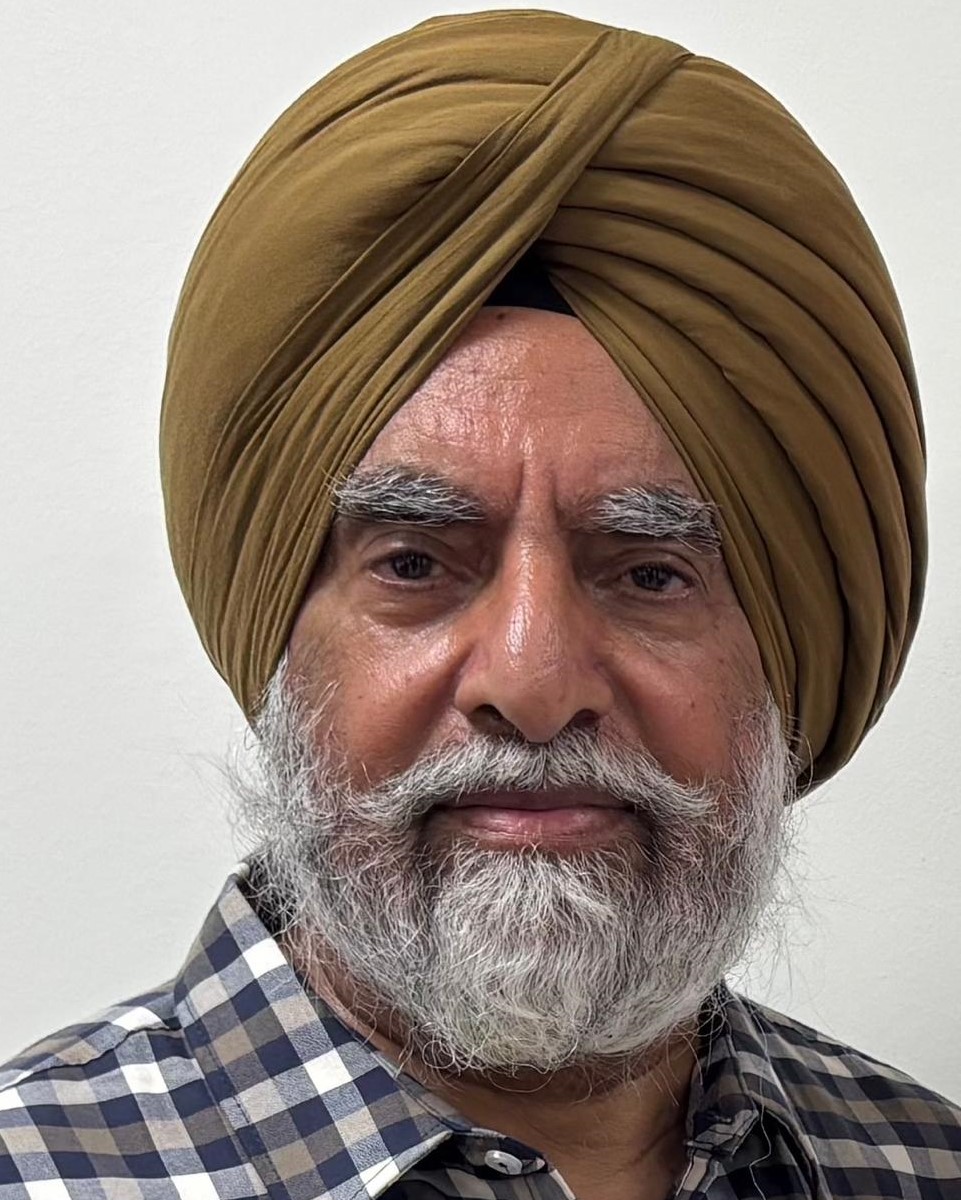
Writer- Gurbakhash Bhandal-
Review by-Kulwinder Singh Bath (California, USA
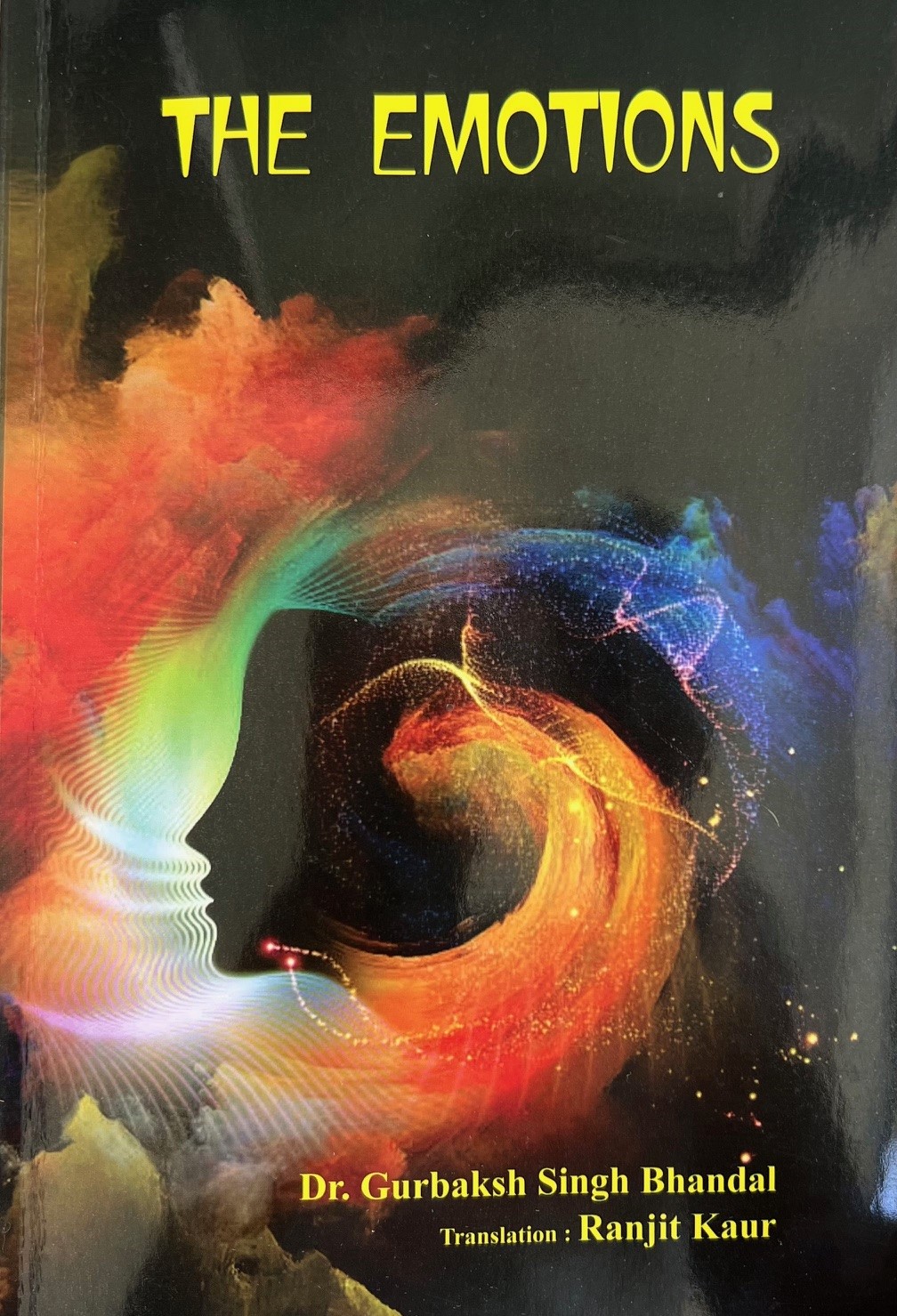
Recently, I had an opportunity to read and enjoy a good book, named “The Emotions”. This book is written by Dr. Gurbakhsh Singh Bhandal and meticulously translated into English language by Principal Ranjit Kaur. Tantalizing first glimpse of the book captivated me. The title is self-descriptive and the content of this masterpiece is incredible, indeed !
Before proceeding to discuss and share my thoughts about this recent experience, I must stress that unfortunately, there aren’t so many books translated from Punjabi to other languages, especially English. The flow is in fact reverse, as there’re abundant of literary pieces translated from various languages into Punjabi. To the best of my understanding, when any composition is translated into another language(s), that composition is in fact re-born. It reaches the hands and minds of many more new readers to enjoy.
One of the objectives any writer has in mind is to connect with the minds of as many readers as possible to convey his / her messages, expressions, emotions and feeling through words and language they recognize, feel comfortable with and would like to connect. However, as the language barriers are removed, the inherent message, the taste & flavor of the original work must remain unaltered.
Since I had read all the articles included in this book in it’s original (Punjabi) version, so while reading and enjoying “The Emotions”, I felt that the translator did a superb job to preserve the ‘core message and essence’ which was embedded within the original write up.
Dr. Gurbakhsh Singh Bhandal, an eminent multifaceted figure is a teacher, a scientist and a well known literarian who has been contributing dearly to the society and literary world alike. An author of dozens masterpieces, he continued his passion till date. He has contributed to multitude of prestigious magazines, newspapers, outlets and so forth for decades.
With a unique blend of a scientist, teacher, writer, thinker and motivator along with his philosophical and analytical approach, emotions and sensitivity towards humanity, social & environmental issues and concerns, Dr. Bhandal enhances human and social awareness to tackle complex issues. Philosophical and spiritual thought process lays down the foundation of his literary work.
His literary work, including this book, philosophically invites, stimulates and encourages readers to reconsider ‘conventional’ social, political, religious and cultural norms and narratives. His literary creations highlight and indicate the ‘way of life’ which needs to be experienced, implemented and inwardly inhabited by humans.
Words are powerful way of communication which can be a light and hope for life as well. Imagine how charismatic would the author be whose literary showcase is loaded with meaningful and ‘therapeutic words’ capable of transforming a person from the brink of hollow, purposeless lifestyle to an enthusiastic life full of celebrations, creativity, optimism and positivity? The messages embedded within the powerful and meaningful wording of Dr. Bhandal’s writings provides clues to change pessimism to optimism!
“The Emotions” is based upon the selected articles drawn from Dr. Bhandal’s treasure of words.
“Those words who gave me THE LIFE” ….
is a dedication message from the person who due diligently translated this book. The message speaks for itself.
228 page book with 32 meaningful essays is published by Chetna Parkashan. Each essay is complete in itself and characterizes the essential core, moral and cultural values.
“The House Prays” & “The Room Prays” are beautifully thought and masterfully crafted literary masterpieces stressing the importance of a family and human beings who interact and bond with brick house (structure) to transform it into lovely home. A synchronization and harmony of inhabitants and non-living structures like walls, roof, windows etc. Everything interacts and communicates like a live / breathing and flourishing ecosystem. Imagine the abandoned home which will decay, disintegrate and eventually gone. Abandoned homes and rooms pray for the inhabitants who left them for one or the other reasons. The scary silence within abandoned homes is an indication of destructive social storm building up.
“My Body” and “The ‘I’ Within Me” meaningfully describe the human beings, their physical / mental needs, various roles played, behavior, ego, pride and problems associated with these evils. The articles also highlight the importance to killing the ‘killer behaviors’, especially when we all know that we live in unpredictable moments like water bubbles and there’s no guarantee of living forever. These articles are not just the literary work, there are serious questions, thoughts and spirituality within the core of these articles.
“Life is a Celebration” is centered on the motivational and positive way of examining and enjoying life. If the measuring stick of the life is the moments of enjoyment rather than the life spent in years, then the celebration of life becomes a part of our life. Negative approach to the life kills a person well before the actual death. So, the message is clear,… be optimistic and enjoy every moment of the life to the fullest!
Human beings are impermanent and mortal. They come and go. However, as described in article “When Feelings Die, Man Dies”, this is absolute truth of human life. Emotions, feelings and sensations are the indicators of living and caring heart. In this chapter, Dr. Bhandal has also explained in great details that the feelings and emotions play a fundamental role in human’s life. It is sad that humans in modern era are quickly transforming into ‘lifeless robots’.
“Meeting Oneself” and “Let’s Find the Human Being, My Friend” are great articles by Dr. Bhandal which highlighted the fact human is losing the human race even running at the supersonic pace. He’s completely lost and always in a rush, not even knowing where he’s going nor taking care of himself. Human has no time or desire to look within himself or connect with his mind and soul. This process must take a u turn to accomplish the fundamental goal of ‘being human’.
In “Dying While Alive” chapter Dr. Bhandal describes that in modern era, most of the folks are ‘walking dead’. Instead of living in present, they’re worried more about the past and the future. They carry heavy burden of unnecessary worries. He beautifully and artistically described that life is a song, a colorful festival and grace of God. It should be lived and celebrated to the fullest. Human should learn from the past, but always live in the present. The emotions are key element of human life and love is one of the way to express them. “The Style of Love” is another fantastic article in which not only the definitions, but also the various forms of love have been shared with the readers. Love within the human relations, love with nature, environment, God, living organisms and so forth… Love shouldn’t vanish from humanity. Love is a pure feeling, a spiritual practice, a worship, devotion and the surrender of soul to soul.
Aristotle once said human is a social animal. Human to human interaction, communication and meeting are vital parts of the human life, relations and society. A lonely person knows how it feels to be alone. However, the desire to see and meet each other should not lack from human behaviors. “The Desires of Meeting” is fantastic article centered on the emotional, physical, social, political and religious connections.
For one or the other reason, putting today’s thing off until tomorrow had been part of human behavior since origin. However, in a supersonically changing modern times, this problem has become a serious issue, leading to serious consequences. In chapter “Dear One, Don’t Delay”, Dr. Bhandal is urging humanity to never delay important things and occasions in life. Better to not delay than regret later in life.
In the last chapter of the book “Wow! Life!”, author is talking about a four letter word called ‘life’ that in fact represents the most beautiful, precious and graceful gift from God, ‘The Art of Living & Celebrations’!
In addition to the articles briefly mentioned above, this book includes handful of essays related to wide array of topics. “Over the of Cup Tea”, “The Prayer of Tears”, “Writing on Blank Pages”, “Poetry Being Poetry”, Drops of Sunshine”, Graves Will Lose”, “Mothers Never Leave” and “Hope All is Well” are very well written articles which connect with the readers.
Each and every article included in this book is not only interesting, but also articulating some social, cultural, religious, environmental awareness topics. In an effort to improve humanity and society, the translator and the author of this good book have succeeded in conveying important messages from the bottom of their hearts. I have no doubt that these messages will reach and connect wider range of readers.
Join me to congratulate Dr. Bhandal and Principal Ranjit Kaur for this great initiative!